Microsoft 365 Copilot Safety Baseline: DLP, Auditability and the Oversharing Fix
Microsoft 365 Copilot is one of the few AI assistants that can be rolled out with enterprise-grade identity, permissions and compliance controls because it is built on top of Microsoft 365. That is the good news. The bad news is that most Copilot risk is not Copilot doing something weird. It is Copilot exposing what your tenant already exposes: overshared SharePoint sites, messy Teams permissions, unmanaged devices and users still reaching for shadow AI tools when the governed option feels less user friendly.
This post gives you a practical baseline: how to use Purview DLP Copilot controls to reduce data leakage, how to think about auditability and how to fix the oversharing problem at the root, without turning your rollout into a six-month governance project.
Definition box: what Copilot safety means in enterprise terms
Copilot safety baseline (enterprise definition)
Your Copilot deployment is safe enough to scale when you can:
- Control who can use it (identity + access)
- Constrain what data it can process or return (labels/DLP)
- Investigate incidents (auditability + logs)
- Prove behavior changes over time (shadow AI down, approved usage up)
Microsoft’s broader framing for AI security, discover, protect and govern AI apps and data, is a useful model here: you are not just configuring settings, you’re running an operational program.
Copilot vs Copilot Chat vs shadow AI tools
Keep this distinction clear in your communications and policies, because users will not read licensing fine print.
- Microsoft 365 Copilot: the paid Copilot experiences inside Microsoft 365 apps (Word, Excel, PowerPoint, Teams, etc.) that ground responses in your Microsoft 365 data via Microsoft Graph and respect existing permissions.
- Microsoft 365 Copilot Chat: the chat experience that can provide enterprise data protection for prompts and responses (visible as a “green shield”) and is positioned as available without extra cost for eligible users.
- Shadow AI tools: consumer chatbots, personal accounts, random browser extensions, meeting bots, or “helpful” plugins, anything used for work outside your sanctioned environment and controls.
The practical admin takeaway: don’t sell this as “Copilot vs ChatGPT.” Sell it as governed vs ungoverned. Read more about shadow AI and Microsoft 365 Copilot.
What Copilot inherits from Microsoft 365
Copilot is safer than most standalone AI tools because it inherits your Microsoft 365 control plane. That’s a strength and also why Copilot will faithfully amplify any permission chaos you already have.
Identity and access are first-class citizens
Copilot operates within your Microsoft 365 tenant boundary and uses the same identity-based access model you already rely on. What a user can see in Copilot depends on what they can already access in Microsoft 365.
Permissions are the real policy engine
Microsoft explicitly states Copilot only surfaces organizational data that the user has at least view permission to access and it’s on you to keep SharePoint/Teams permissions aligned to least privilege.
Purview controls can apply to Copilot interactions
Copilot honors Microsoft Purview Information Protection usage rights, like sensitivity labels and IRM, when accessing protected content.
Prompts/responses stay within the Microsoft 365 service boundary
Microsoft’s documentation explains that prompts, retrieved data and generated responses remain within the Microsoft 365 service boundary and that Copilot uses Azure OpenAI services for processing (not OpenAI’s public consumer services).
Copilot stores “activity history” (and you should treat it as data)
Microsoft notes that Copilot stores interaction data (prompt + response + citations) as a user’s Copilot activity history and users can delete their activity history.
Why this matters: if you’re building an incident response posture, you need to know what is stored where, what users can delete and what your org-level audit strategy is.
What still goes wrong
Even with strong vendor guardrails, Copilot rollouts commonly stumble on five very predictable failure modes.
1) Oversharing: Copilot doesn’t create permission problems but Copilot does reveal them
Copilot only shows what users can access. But if everyone can access everything, Copilot will happily summarize it. Microsoft’s own guidance points straight at your underlying permission model as the boundary that prevents data leakage between users and groups.
Oversharing fixes that actually work:
- Treat SharePoint and Teams cleanup as a Copilot prerequisite, not a nice-to-have.
- Prioritize: external sharing, everyone except external users, broad sites, stale Teams and legacy shared mailboxes.
- Align sensitivity labels to business reality (if everything is general, nothing is protected).
2) Data sprawl: “It’s in M365” is not the same as “it’s governed”
If your tenant contains years of duplicates, abandoned project sites and messy document taxonomies, Copilot will surface content that’s technically permitted but practically outdated or misleading. Fix: before you panic about AI hallucinations, audit your content hygiene:
- canonical sources for policies
- archival rules for old project spaces
- ownership for critical repositories
3) Prompts can leak sensitive data, especially in “quick help” moments
The most common leakage pattern is still human behavior: someone pastes a customer contract clause, a passport scan, or pricing terms into a prompt “just to get a summary.”
This is where Purview DLP Copilot becomes a real control, not a compliance checkbox.
4) Unmanaged devices and browsers make policy optional
If a user can access Copilot from unmanaged endpoints, you can lose control over:
- screenshots
- copy/paste exfiltration
- browser extensions
- unsanctioned upload paths
Your Copilot baseline should be aligned with your endpoint and browser governance, because Copilot itself can’t fix unmanaged clients.
5) Agents and connectors expand your risk surface (quietly)
Microsoft highlights that Copilot can reference third-party tools and services via Microsoft Graph connectors or agents and that admins control which agents are allowed in the organization and can review permissions and privacy statements.
Practical takeaway: treat agents/connectors like apps. Review scopes, terms and data access. “It’s just an add-on” is how data boundaries get fuzzy.
How Purview DLP helps protect Copilot and Copilot Chat
If you want one concrete control to start with, make it DLP, because it directly targets the “people paste sensitive things into prompts” reality. Microsoft documents two ways DLP can protect interactions with Microsoft 365 Copilot and Copilot Chat:
- Restrict sensitive prompts (preview)
You can create DLP policies using sensitive information types (including custom ones) to restrict Copilot/Copilot Chat from processing prompts that contain that sensitive data. This is designed to mitigate leakage and oversharing by preventing responses when prompts contain sensitive info. - Restrict processing of sensitive files and emails (generally available)
You can prevent files/emails with sensitivity labels from being used in response summarization for Copilot and Copilot Chat.
A few details worth knowing because they affect rollout expectations:
- The Copilot/Copilot Chat policy location is only available in a custom policy template.
- DLP alerts/notifications and simulation mode are supported.
- Policy updates can take time to reflect in the Copilot experience (Microsoft notes up to four hours).
Opinionated guidance: start with a narrow DLP scope that is uncontroversial (payment cards, passport IDs, national IDs, customer PII patterns) and scale from there. Your goal is to prevent obvious mistakes first, not to perfectly encode every policy on day one.
Mini scorecard: Copilot safety baseline you can run in 30 days
Use this as your short, practical “are we ready to scale?” scorecard.
|
Control area |
Baseline goal |
What “done” looks like |
|---|---|---|
|
Permissions & oversharing |
Reduce “everyone can see everything” |
Top SharePoint/Teams hotspots remediated; external sharing reviewed |
|
Purview DLP for Copilot |
Stop sensitive prompt leakage |
DLP policies for sensitive prompts (where supported) + labeled file/email restrictions |
|
Sensitivity labels |
Make data classification real |
Labels in place for key repositories; users trained on “what label means what” |
|
Auditability |
Investigate incidents |
Clear audit/log strategy for Copilot usage and admin actions (SOC-ready) |
|
Agents/connectors |
Prevent scope creep |
Allowed agents list, scopes reviewed, privacy/terms documented |
|
Endpoint/browser |
Make controls enforceable |
Copilot access aligned with managed endpoints / browser controls |
|
Adoption + behavior |
Prove shadow AI decreases |
Metrics show sanctioned usage up and shadow usage down (see visibility layer) |
For a broader cross-tool framework, see our AI Tool Safety Scorecard (2026).
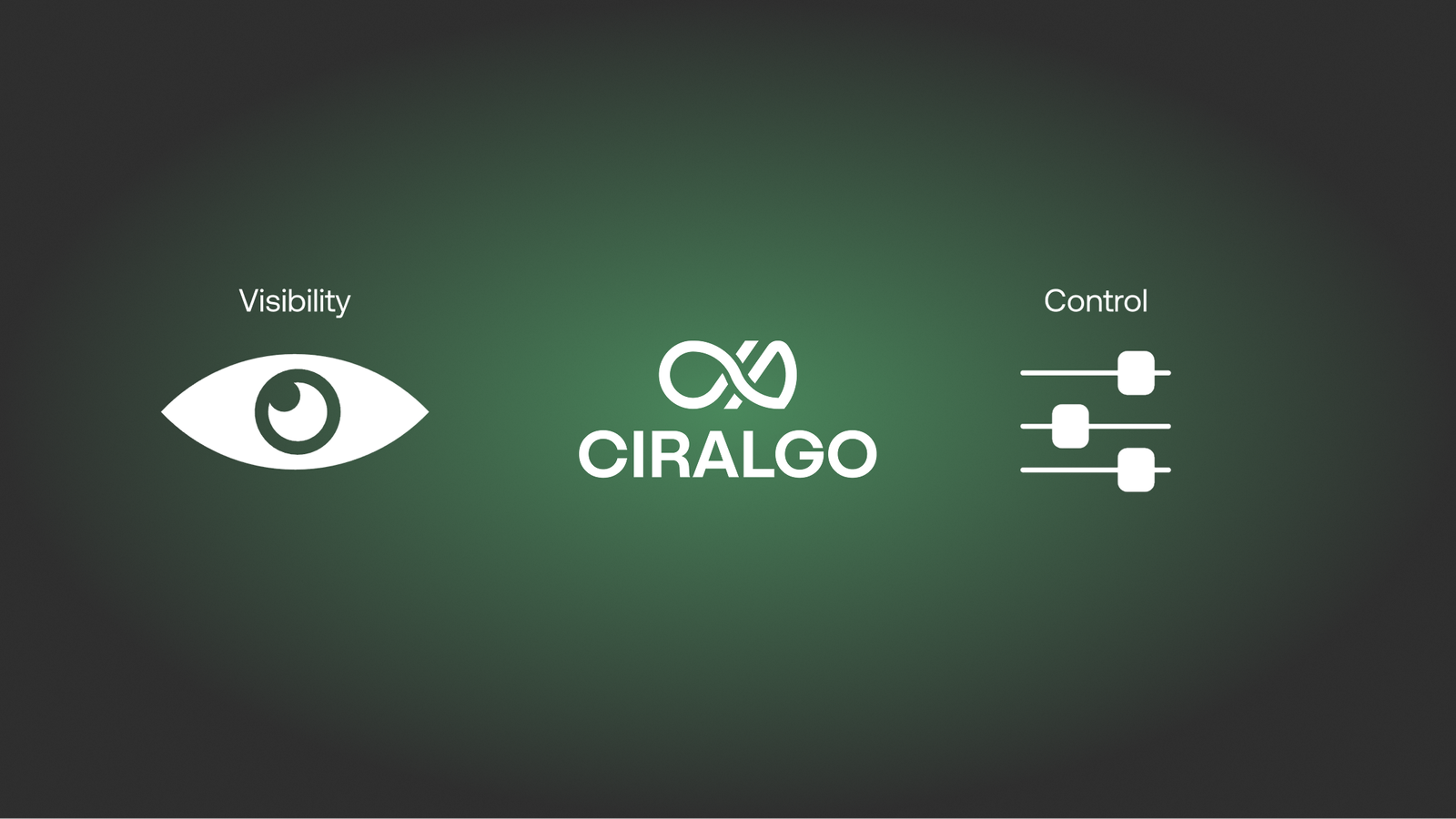
Control layer vs visibility layer: where Ciralgo fits
Microsoft gives you a powerful control layer:
- identity, access and permissions
- Purview controls (labels, DLP)
- admin governance for agents and integrated apps
- enterprise protections in Copilot Chat
But most organizations still struggle with a simple question:
“Are people actually using the governed option and is shadow AI going down?”
That is the visibility gap. Dashboards often show licensing and high-level usage, but not:
- which external tools are still being used
- where shadow AI clusters (which teams/workflows)
- the cost duplication across tools
- and which workflows actually deliver time saved
This is where Ciralgo comes in: Ciralgo provides the visibility and adoption analytics layer across tools and teams, showing whether shadow AI decreases as Copilot adoption increases, alongside cost, time saved and risk hotspots.
If you treat Copilot rollout as a program, you need controls and measurement. Otherwise you’ll end up “secure on paper” and surprised in practice.
Checklist: Copilot safety baseline for M365 admins
Use this as a copy/paste checklist for your rollout plan.
- Inventory where Copilot will be used first (roles, departments, priority workflows).
- Document “don’t paste” examples (contracts, HR data, customer PII) in plain language.
- Identify top oversharing hotspots in SharePoint/Teams and fix them before broad rollout.
- Enforce least-privilege access patterns for high-sensitivity repositories.
- Implement sensitivity labels for key content (start with a small set users understand).
- Configure Purview DLP policies for Copilot/Copilot Chat to restrict sensitive prompts where supported.
- Configure DLP to restrict labeled files/emails from being used in summarization (where applicable).
- Decide your agent strategy: which agents are allowed, who can add them and how scopes are reviewed.
- Document how Copilot uses organizational data (reduce fear, increase trust).
- Align Copilot access with endpoint/browser governance (managed devices for sensitive roles).
- Define auditability: what logs you rely on, who reviews them and incident response steps.
- Prepare a “safe alternative” plan: when users ask for tools you won’t approve, provide a governed path.
- Create an Approved / Tolerated / Prohibited AI tools register and publish it internally.
- Run a phased rollout (pilot → expanded groups) and measure behavior change after each wave.
- Track success metrics: adoption by workflow, reduction in shadow AI usage, incidents avoided and time saved.
- Reassess monthly: permissions drift and new agents/connectors can reintroduce risk.
Interested how this relates to EU/GDPR regulations? Checkout out our Security & Trust page.
FAQ
Closing: the oversharing fix is a data governance fix
Copilot safety is not a single toggle. It’s a baseline:
- tighten permissions so Copilot can’t “summarize the mess,”
- use Purview DLP Copilot controls to block sensitive prompt mistakes,
- govern agents/connectors like real apps,
- and measure whether behavior changes (approved usage up, shadow AI down).
If you want to understand how AI is actually used across your teams and whether your Copilot rollout is reducing shadow AI, Ciralgo can give you that visibility. Book a 20-min call.
Disclaimer: This article is for informational purposes only and does not constitute legal advice.